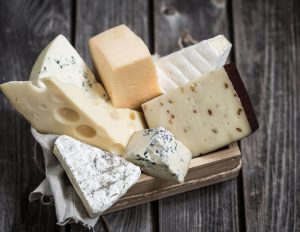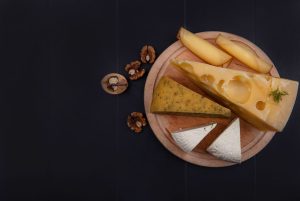
There is a moment at almost every good gathering when someone walks in carrying a cheese board and the entire energy of the room shifts. People gravitate toward it. Conversations form around it. Someone reaches for a piece of aged cheddar, pairs it instinctively with a slice of apple, eats it, and says something like that is surprisingly good. What they are experiencing in that moment is not luck. It is flavor science. It is the result of contrasting and complementary taste compounds meeting on the palate in a way that makes each element taste more like itself than it would alone.
The Flavor Science Behind Why These Pairings Work
Before getting into specific combinations, it is worth understanding the sensory principles that make cheese, fruit, and nut pairings work at a fundamental level. These are not arbitrary traditions or aesthetic choices. They are grounded in the way human taste perception operates and the specific flavor compounds that different foods contain.
The most important principle is flavor contrast. Human taste perception is heightened by contrast. A salty food tastes saltier next to something sweet. A rich, fatty food feels lighter and more interesting next to something acidic. A bitter element makes a sweet one taste sweeter by comparison. Cheese is typically high in fat, protein-derived umami, and salt. Fruits bring sweetness, acidity, and in many cases a water content that cleanses the palate between bites. Nuts bring bitterness, crunch, and additional fat in a form that is structurally different from cheese fat and therefore adds complexity rather than redundancy. These three categories are almost perfectly designed to complement each other because they hit different primary taste receptors and different textural sensations simultaneously.
The Role of Fat, Acid, and Tannin in Pairing Decisions
Fat content in cheese is central to how it pairs with fruit and nuts. High-fat cheeses like triple-cream Brie, mascarpone, and aged Gruyere coat the palate with richness that needs to be cut periodically to keep the eating experience from becoming monotonous. Acidic fruits do this brilliantly. The malic acid in green apples, the tartaric acid in grapes, and the citric acid in fresh berries all cut through fat efficiently, refreshing the palate and making the next bite of cheese as interesting as the first. This is why the combination of a rich, creamy cheese with a sharp, acidic fruit is so universally satisfying. It is not a coincidence. It is chemistry.
Fresh and Soft Cheeses: Pairing With Bright, Acidic Fruits
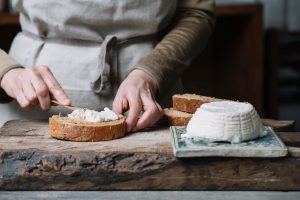
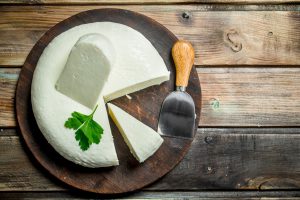
Fresh and soft cheeses occupy the lightest, most delicate end of the flavor spectrum. Ricotta, fresh chèvre, burrata, fromage blanc, and similar cheeses have subtle, milky, slightly lactic flavors that are easily overwhelmed by aggressive pairing partners. The fruits and nuts that work best with this category share the same qualities: bright, clean, and not too intense.
Honey as the Third Element in Fresh Cheese Pairings
Honey deserves its own consideration in fresh cheese pairings because it acts as a flavor bridge between cheese and fruit with remarkable effectiveness. Different honeys have dramatically different flavor profiles that can be matched to specific cheeses and fruits. A delicate acacia honey, nearly colorless and gently sweet, works with fresh chèvre and sliced strawberries without competing with either. A darker buckwheat honey, with its robust, almost molasses-like depth, can stand up to stronger cheeses and more intense fruits. Wildflower honey sits in the middle and is the most versatile everyday choice for cheese boards.
Bloomy and Soft-Ripened Cheeses: Stone Fruits and Rich Nuts
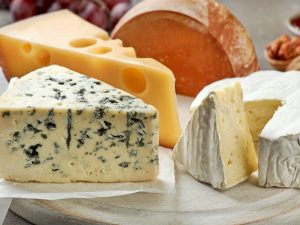
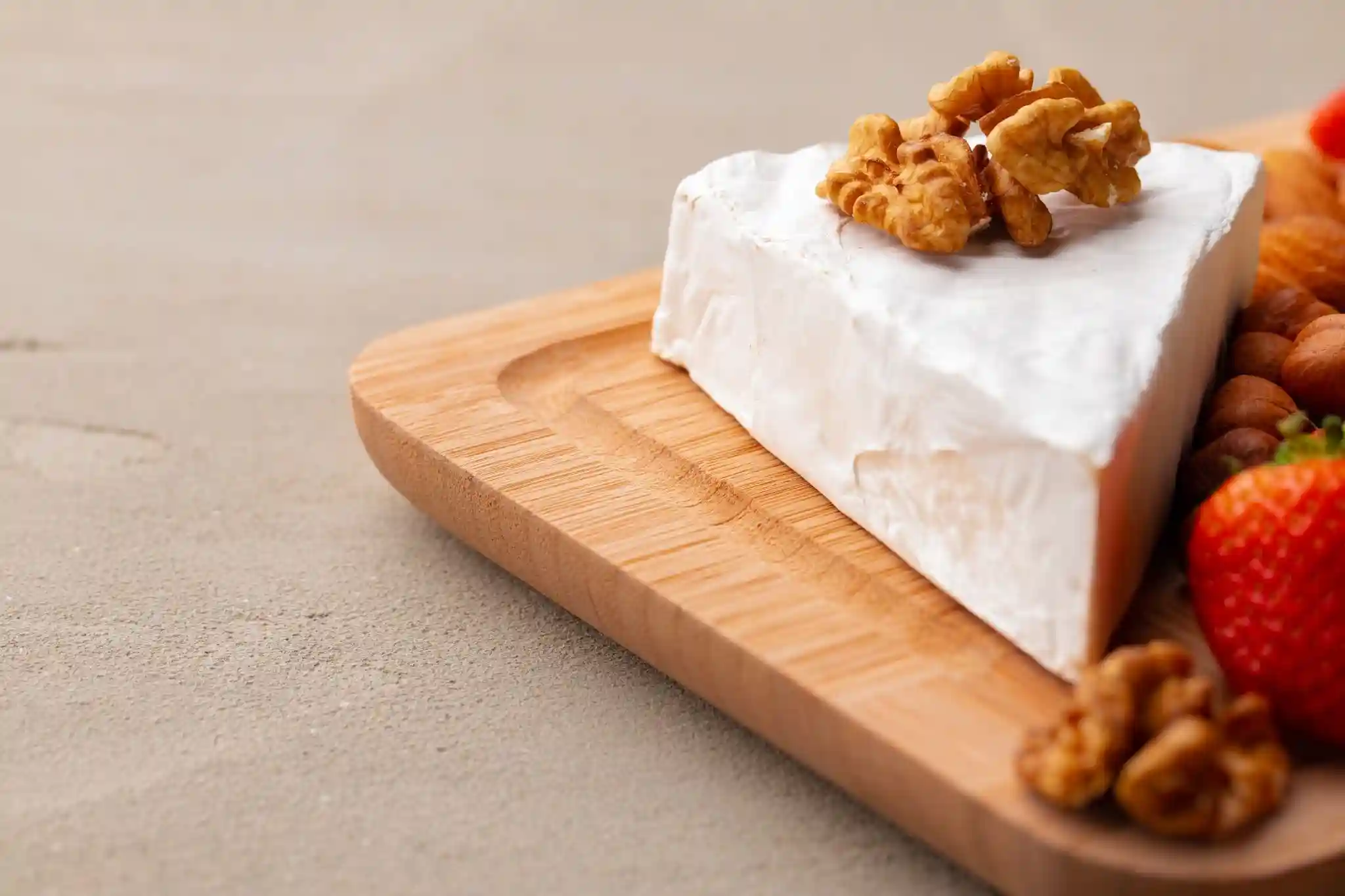
Bloomy rind cheeses like Brie and Camembert, and double or triple cream cheeses like Brillat-Savarin, sit at the richest, most indulgent end of the soft cheese spectrum. Their high butterfat content and mushroomy, earthy rind character call for pairing partners that can match their richness while providing contrast that keeps the palate engaged.
Ripe stone fruits are the ideal fresh fruit companions for this category. A ripe white peach sliced alongside a wedge of room-temperature Brie creates a combination that is lush in the best possible way. The peach’s delicate sweetness and floral aroma complement the Brie’s creamy paste, while its acidity cuts through the fat of the cheese with each bite. Apricots, both fresh and dried, work with similar success. Fresh apricots bring a slightly sharper acidity that is particularly effective against a very rich triple-cream. Dried apricots concentrate that sweetness and acidity into a more intense form that pairs beautifully with stronger bloomy cheeses that might overwhelm a delicate fresh fruit.
Hard Aged Cheeses: Bold Flavors Need Worthy Partners
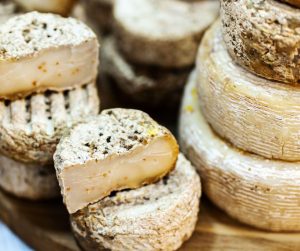
Hard aged cheeses including Parmigiano-Reggiano, aged Pecorino, aged cheddar, dry Jack, and cave-aged Gruyere have intensely concentrated, complex flavor profiles that require pairing partners with enough character to meet them on equal terms. Delicate fruits that work beautifully with fresh chèvre will simply disappear against the assertive flavor of a three-year-old cheddar. This category demands partners with presence.
Aged cheddar is perhaps the most widely consumed hard cheese in the English-speaking world, and it has a set of pairing affinities that are deeply intuitive for anyone who grew up eating it. Apple is the classic fruit partner, and for good reason that goes beyond tradition. The malic acid in apple, particularly in varieties like Granny Smith or Pink Lady, cuts through the richness of aged cheddar while its natural sweetness contrasts with the cheese’s sharpness. The apple’s crisp, clean texture against the dense, slightly crumbly paste of a well-aged cheddar creates a textural pairing as satisfying as the flavor one. Pears work similarly but with a softer, slightly floral quality that suits more mellow aged cheddars better than it suits the most aggressive ones.
Building Contrast Without Losing Balance
Food pairing consultant and culinary educator Tia Keenan, author of works on cheese culture and pairing, has articulated a principle that applies perfectly to hard aged cheese pairings: the intensity of the pairing partner should always be proportional to the intensity of the cheese. A mild fruit overwhelmed by a powerful cheese creates a board where the cheese dominates everything, which is less interesting than a board where each element holds its own. This does not mean the partners need to be equally intense. It means their intensities need to be in a relationship that creates contrast rather than competition.
Blue Cheeses: The Pairing Category With the Highest Ceiling
Blue cheeses are the most divisive in the cheese world and also the most rewarding when paired correctly. Their pungency, saltiness, and the specific flavor compounds produced by Penicillium roqueforti create a set of pairing affinities that are unusually precise. Get them right and the result is extraordinary. Get them wrong and the blue cheese simply overwhelms everything around it.
The single most important principle in pairing blue cheese with fruit is sweetness as a counterbalance to intensity. The saltiness and pungency of a Roquefort, a Gorgonzola dolce, or a Stilton need a sweetness in the pairing partner that is rich enough to create genuine contrast. Honey is the most reliable tool in this pairing, particularly a darker, more complex honey like chestnut or buckwheat that can stand up to the blue cheese’s intensity. Fresh figs and ripe pears are the classic fruit pairings for blue cheese for this exact reason: both have enough sweetness and body to balance the sharpness without being overwhelmed by it.
Every Pairing Is an Invitation to Pay Attention
The deepest pleasure of cheese fruit nut pairings is not the impressive board or the knowing nod when a combination works. It is the moment of genuine attention that a great pairing creates. You slow down. You notice what the sweetness of a fig does to the sharpness of a blue cheese. You register the way a walnut’s bitterness makes a rich, creamy triple-cream feel lighter. You taste the way a crisp apple slice resets your palate between bites of aged cheddar so that each piece tastes as vivid as the first.
That kind of paying attention is one of the small luxuries of eating well, and it does not require a restaurant, a reservation, or a large budget. It requires a wedge of something good, a handful of seasonal fruit, a few nuts, and the knowledge of why they belong together. Build that knowledge and every cheese board you make, however simple, becomes an experience worth having.