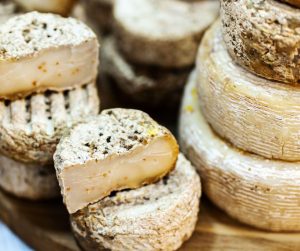
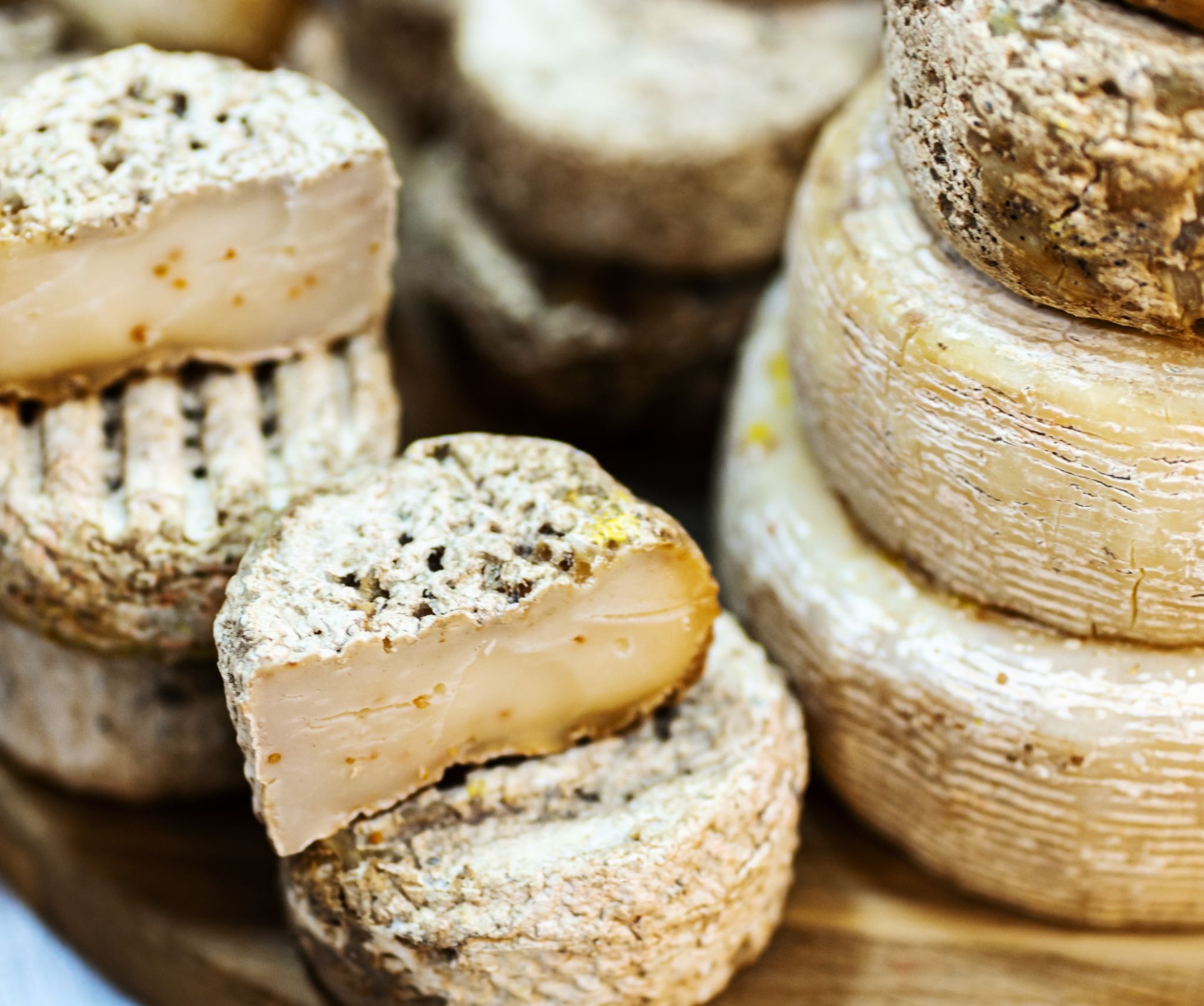
There is a cave in the French Pyrenees where wheels of Roquefort have been aging for centuries. The walls are covered in a specific blue-green mold that exists nowhere else on earth in quite the same concentration. The cheesemakers who work there did not invent this process. They inherited it, refined it, and passed it forward. Every wheel of Roquefort that leaves those caves carries within it an unbroken chain of human knowledge stretching back over a thousand years. That is what artisan cheese making really is. Not just a production method. A living conversation between people, place, milk, and time.
It Begins Long Before the Milk Hits the Vat
Most people think artisan cheese making starts in the creamery. It actually starts in the pasture. The quality, character, and composition of the milk that goes into an artisan cheese is the single most important variable in the entire process, and it is determined by decisions made long before any cheesemaking begins. What the animals eat, where they graze, what breed they are, what time of year the milk is collected, and how it is handled between milking and the creamery all leave their fingerprint on the final cheese.
Breed, Seasonality, and the Composition of Milk
The breed of animal matters enormously in artisan cheese making, and experienced cheesemakers choose their herds with the final cheese in mind. Holstein cows produce large volumes of relatively lower-fat milk, which works well for mild, high-yield cheeses. Jersey and Guernsey cows produce smaller volumes of much richer, higher-fat, higher-protein milk with a characteristic golden color from elevated beta-carotene content. Their milk makes cheeses with a deeper golden hue, a richer mouthfeel, and a more complex buttery flavor.
The Transformation: From Living Milk to Solid Curd
The cheesemaking process itself is a controlled series of biological and chemical transformations that the artisan cheesemaker guides with knowledge, observation, and physical skill. It begins with warming the milk to a specific temperature and introducing a starter culture, a community of carefully selected lactic acid bacteria that begin consuming lactose and producing lactic acid. This acidification is the first critical step. It lowers the pH of the milk, beginning the process that will eventually separate it into solid curds and liquid whey.
The choice of starter culture is one of the most consequential decisions in artisan cheesemaking. Industrial cheese operations use standardized, commercially produced starter cultures that behave predictably and consistently regardless of the milk they encounter. Artisan cheesemakers often use what are called undefined or natural starter cultures, complex communities of bacteria that have been maintained and propagated in the specific cheesemaking environment over years or decades. These cultures carry the microbial history of the creamery itself, and their complexity contributes directly to the flavor complexity of the cheese they produce. A cheesemaker who has been maintaining their own starter culture for twenty years is working with a living ingredient that is unique to their operation and irreplaceable.
The Art of Curd Handling and Whey Expulsion
After cutting, the curds are cooked, stirred, or left undisturbed depending on the type of cheese being made, and each of these choices creates fundamentally different outcomes. For a Gruyere or an alpine-style cheese, the curds are heated to high temperatures while being continuously stirred, expelling large amounts of whey and creating a dry, compact curd that will eventually become a firm, long-aging wheel. For a Camembert or a soft-ripened cheese, the curds are handled gently and minimally, preserving moisture and creating the soft, yielding texture that defines that style.
The physical act of working the curds is deeply skilled work. An experienced cheesemaker reads the curds by feel and by appearance, adjusting temperature, stirring speed, and timing based on what the milk is telling them rather than following a rigid schedule. The milk varies from day to day based on season, weather, animal feed, and a dozen other factors. A good artisan cheesemaker adapts to those variations intuitively, making small adjustments that keep the process on track even when the raw material behaves differently than expected.
Salt, Rind, and the Beginning of Identity
Salting is one of the most important and least discussed stages in artisan cheese making. Salt does several things simultaneously. It draws out additional whey from the surface of the cheese, slowing moisture loss from the interior and creating a gradient from dryer surface to moister core. It inhibits the growth of unwanted bacteria while permitting the desirable ones to thrive. It firms the rind. And critically, it contributes directly to flavor in a way that cannot be separated from the cheese’s identity.
Artisan cheesemakers salt their cheeses in different ways depending on the style. Some are rubbed with dry salt by hand, a labor-intensive process that requires careful attention to ensure even distribution. Others are submerged in brine tanks for periods ranging from hours to days, with larger wheels requiring longer immersion to allow salt to penetrate to the center. Some soft cheeses are salted directly in the curd before molding. The method of salting affects the texture of the rind, the rate of moisture loss during aging, and the flavor balance of the finished cheese.
What Protected Designations Mean for Artisan Producers
Many of the world’s most celebrated artisan cheeses are protected by designations of origin, legal frameworks that restrict the use of a cheese’s name to producers who meet specific geographical and production requirements. In Europe, the most important of these is the Protected Designation of Origin, or PDO, which guarantees that a cheese was made in a specific region using specific methods and, in many cases, specific breeds of animal grazing on specific land.
Parmigiano-Reggiano can only be made in a defined area of the Emilia-Romagna and Lombardy regions of Italy, from the milk of specific cow breeds, using methods codified in a production specification that governs everything from the size of the wheel to the minimum aging period. A wheel that does not meet every requirement of that specification cannot be called Parmigiano-Reggiano, regardless of how similar it might taste. The same principle applies to Comté in France, Manchego in Spain, and dozens of other celebrated cheeses worldwide.
The Human Legacy Behind Every Wheel
Cheesemaking consultant and educator Ivan Larcher, who has trained cheesemakers across Europe and North America, has said in professional training contexts that every artisan cheesemaker is simultaneously a scientist, a farmer, and an artist, and that the loss of any one of those dimensions produces inferior cheese. The science is the understanding of microbiology, chemistry, and the physics of curd behavior. The farming is the attention to the animals, the pasture, and the milk. The artistry is the judgment, the intuition, the willingness to respond to what the milk is doing rather than imposing a fixed process onto variable raw material.
Time Is the Final Ingredient
Of all the things that go into an artisan cheese, the one that cannot be rushed, substituted, or optimized away is time. Time is what allows enzymes to break down proteins into amino acids that taste of umami and sweetness. Time is what allows fats to hydrolyze into the aromatic compounds that give aged cheese its complex, layered character. Time is what allows the rind to develop, thicken, and begin to guide the ripening of the interior from the outside in. Time is what separates a young, mild wheel from the same wheel six months later, when it has become something with genuine depth and personality.
Artisan cheese making is an act of faith in time. The cheesemaker puts in the work, the knowledge, and the care at the beginning, and then waits. They tend the aging wheels with patience and attention. They trust that the process they have set in motion will arrive at the result they are working toward, even though they cannot fully control it. That combination of skilled intention and patient surrender is what produces the cheeses that stop you mid-bite and make you pay attention. The ones that taste like somewhere specific, made by someone specific, at a particular moment in the long, unbroken tradition of human beings turning milk into something that lasts.